Monday, February 18, 2013

Sample Oral Assessment

The Piano Film review (HL)

I listened to the oral of the piano film and looked at the examiners comments. Based on the IB rubric my score to this student is 24/25, but the score given by the examiners is 23/25. For me the student explained thoroughly the importance of the extract of the film by using film language and always relating it to the film as a whole. She shows insightful interpretation and supports it by talking about cinematography, editing, and genre. In addition, she also talks about the music, though I wish she would explain how that creates meaning and what effect does it has on the film. 

The Bride of Frankenstein review (SL)

This review was scored by the examiners with 22/25, but the score I would give him is 24/25. The examiner explains that the only reason it didn't get the highest score is because of absence of social-culture, however, I feel that he does explains the social culture of the film and how it affected the film. In addition, his explanation is well organized making it easier to understand  and most importantly he connects the extract to the film as a whole. The only reason why I would not give him the maximum score is because I feel he could have explored the genre a little bit better. 

Wednesday, February 13, 2013

The Grapes of Wrath: Film Language and Representation

Film Language and Representation

The 5 minutes extract is at 30:04-34:44min right before the Joad family leaves Oklahoma to go to California  they're finishing packing the truck. The main characters on this scenes are Ma, played by Jane Darwell and Grandpa, played by Charley. Grapewin. They are presented as the rock of the family and through this scene it's shown how they deal with the idea of leaving California. The issues of economy and survival are presented by the situations are given, having to leave their home and learning to move on. The actors do a great job of portraying the sadness and disillusion caused by Great Depression and contribute to the genre of drama. Ma shows emptiness and sadness in her eyes when she's looking at herself in the mirror with the earrings in flower shape. Grandpa looks tired and unwilling to leave his land as he says "this my dirt, it aint good, but it's mine, mine". Their acting was "invisible" meaning that their performance was believable  they embodied their character and it couldn't be told it was acting because of how realist it was. 

The camera work is simple, but effective. At first there are several MS and CU, but later when they're talking to Grandpa the use of LS and MS is used more often. Usually the camera is positioned on the side of the actor and not directly in front of them unless is a CU. There's no camera movement; it never follows a character o tilts up or down. To changer perspective, it changes angle of shot. The cinematography emphasizes drama because it focuses on the actor's face when it's necessary to convey an emotion and then uses further shots to add suspense and uncertainty. This film is closed form because in the CUs the characters seem tapped trapped, they are static thus implying how they felt in the story line, not free. The editing is slow cutting because it goes with the sad mood of the scene. In addition it has reaction shots, 180 degree rule and movement match just to name some of the editing techniques used. Analyzing the editing it can be interpreted as a way to reassure that this is a classical film because of it's features. Another important aspect is the lighting, there's dominant contrast in order to emphasize Ma's emotions and the objects that she's holding. Her face and the objects in her hand are brighter than the rest of what's in the scene. Since there's black and white, the black color represents the situation America is in, a dark time. But the white is the light of hope that things will get better. 

The sound is critical in the success of this scene. There's diegetic sound when we hear, the fire burning, the door swing, and the steps of Grandpa on the dirt.  In the beginning of the scene there's background music playing, the song is called "Red River Valley" which is a sad, melancholic track that it's used throughout the entire film when there's a sad moment. This song is slow tempo and low key because it want to go along with the depressing mood. Furthermore, there's symbolism in the scene, especially when Ma is holding those earrings in shape of flower which represents life, which is ironic because the land was dead due to the Dust Bowl. As Ma looks at herself in the mirror she realizes it's no time to wear nice things, but yet she saves them implying that she could use them in the future, it's symbolism for the theme of hope. Lastly the setting is at inside the house and outside the house. It establishes the setting which is a rural environment because of The Great Depression and also because John Ford liked to do his films in real environments. 


Tuesday, February 12, 2013

Socio-Cultural Influences in The Grapes of Wrath

The film's themes are hope and democracy and they basically represent the Great Depression era. America was suffering the Great Depression and the farmers specially in Oklahoma were severely affected because they lost their land due to the Dust Bowl and they had to migrate to California. The Film questions democracy, it makes a strong statement on weather all they're doing is worth it because the people are suffering the most. It's a difficult and depressing time for the people, but yet John Ford decides to include the theme of hope because of the difficult era. These themes bring conflict to the story plot and because the characters struggle to survive, which is a familiar situation for the American, they develop interest and grow attached to the characters. All this contributes to the genre of drama; the critical situations, the conflicts and the suspense all are part of the drama genre. In addition many of the values that the characters fight for are values that the audience share and they feel related to them, this part of what makes The Grapes of Wrath a classic film. Another film that can be related to this work is Our Daily Bread directed by King Vidor in 1939. These are american film and target the American audience because they're the ones that can relate to the film, especially adults. The Grapes of Wrath represent the American culture and make a huge impact of society, because they see the story of their lives being played on the big screen. But it also inspires other films to attempt to bring reality to a film and appeal for the audience's emotional attachment to the characters and story. 


Monday, February 11, 2013

The Grapes of Wrath: Narrative and the Film Extract

The narrative structure is being told by an unknown narrator. He's the omniscient narrator because he knows everything. It's a 3 act narrative structure;there's the beginning, middle and end. The story is direct, only present time is being used given that there're no flashbacks nor frontwards. The narration is being organized by the plot, the chronological order of events. Since the story is about the Oklahoma family that moves to California because they have lost their land due to the Dust Bowl, during the Great Depression era. The protagonist is Tom Joad through the narration we learn that he's being in jail and now that he's out he just lost his home. The narration doesn't take a side of the farmer and shows how they struggle go to California and find jobs. Because of the background given and the fighting spirit of the Joad family, the audience engages into the story and develops interest for the characters. All this is product of the narrative and 3 act structure. In addition, theme of hope, racism, and democracy is explored in the story and portray through the events occurred in the film. 

Sunday, February 10, 2013

Historical and Institutional Influences

The Grapes of Wrath by John Ford is a 20th Century Fox production in 1940. It won the academic awards of Best Supporting Actress (Jane Darwell) and best Director (John Ford).  The film's historical significance relates to The Great Depression and explores the migration of farmers to California.These farmers have lost their lands due to the Dust Bowl and also to the landlords taking over them. The film also explores racism, lack of rights and makes the statement that the people will get America out of the Great Depression. The Grapes of Wrath is an iconic film because the story itself talks about how Americans were suffering in the Great Depression. John Steinbeck, wrote a story that protested the government propaganda and demonized the union out of indifference and greed. However, for the film the ending was different from the book because Ford wanted to end the story with a positive note that would give Americans the hope that they need.  

The Grapes of Wrath was also successful in the film industry, it had 5 academy award nominations and it was given positive reviews by the critics. The movie was ranked #7 on the American Film Institute's 2006 list of the Most Inspiring Movies of All Time. And in 2007, ranked #23 on the American Film Institute of the Greatest Movies of All Time. In addition, several newspapers lie The New York Times gave memorable reviews to this film


 "The Grapes of Wrath is just about as good as any picture has a right to be; if it were any better, we just wouldn't believe our eyes."
-Frank Nugent, New York Times, January 25, 1940

"Through Nunnally Johnson's articulate script, Ford is pleading, pleading, pleading, and in the film's last quarter he offers perhaps too optimistic a salve...Jane Darwell as Ma gives a wholly committed performance, but it is Fonda, with his cat-like walk and his deep-etched gaze, who takes on the features of an Everyman, suffering with grace and every so often lashing out against exploitation. Few Hollywood films have taken so stern a stand against the realities of social injustice."
- Peter Cowie, Eighty Years of Cinema

Finally, the 20th Century Fox already had explore great success with other films such as Young Mr. Lincoln which also happens to be directed by John Ford. Thus implies that this household name qualified John Ford the best candidate to bring John Steinbeck's story onto the big screen. The budget for this film was about 750,000 which partially explains why The Grapes of Wrath was such a successful production.  


Wednesday, February 6, 2013

The Grapes of Wrath- Genre and Audience


The genre of The Grapes of Wrath is Drama. The topic of the Great Depression is addressed in the film, the story plot is about an Oklahoma family that moves to California looking for jobs during the 1930s. There are many obstacles presented in their trip to California and the grandparents don't make it to the promised land. Other work that might be connected to this film is Of Mice Of Men directed by Lewis Milestone and Our Daily Bread directed by King Vidor. These two film are during the great depression and face similar issues as The Grapes of Wrath. Of Mice Of Men in particular is an adaption from the book Of Mice Of Men by John Steinbeck, which is also the writer of the book The Grapes of Wrath, which was adapted into a movie and directed by John Ford. The producers of this film were Darryl F. Zanuck and Nunnally Johnson. In addition the cinematographer was Gregg Toland, whom had gain experience over the years in this area. This film relates to other significant work from Ford such as Young Mr. Lincoln and Drums along the Mohawk in terms of genre and story plot. They address social and political issues which develop the story in. In addition, the significant narrative addresses socialistic views. The people in the community are being victims of government land takeover and they're struggling to survive. They can't find jobs in Oklahoma and decide to move to California in search of opportunities. This narrative is communicated through visual and technical elements such as the variety of shots, mostly longs shots. Also the costume, setting and props help make the feel more realistic and appeal to the audience's sentiments. In relation to the audience, John Ford targets the an adult audience by exploring social issues and themes that they can understand and relate to. The theme of the film is growth and maturity; in the beginning Tom Joad is portrayed as a selfish character that as the story develops he become to understand maturity and responsibility.

Saturday, January 12, 2013

From Silents to Studio' Golden Years


Part 1: Explore how the inclusion of sound in the movie pictures impacted the Movie Industry. Detail how it happened, who was effected, what was lost. The inclusion of sound occurred because the Warner Brother were struggling to survive in the Film Industry and despite the consequences of the "talkies", they  produced The Jazz Singer, the first film with dialogue. It only had 354 spoken words and background music, but it was enough to target the audience and revolutionize the film industry. The Warner Brothers immediately released another "talkie" called The Singing Fool which cost $200,000 to make and brought in $5M. However, this created an enormous change because most studios started to create films with dialogue even though they were sacrificing production value. In order to have audio the camera was housed in a soundproof, which made it immobile; thus making the shots static and non-creative. In addition, many actors had thick accents or their voices didn't match their image, therefore they lost their jobs. 

Part 2: The 20 years between 1930 and 1950 are generally recognized as the studio years. Describe what the pros and cons were of this factory system.The Studio Years, 1930-1950, brought pros to the factory system such as the expansion of film industry. They created elaborated sound stages across California, and theaters had 30 seats, 10 more than past theaters. In addition to the pros they also establish a medium price ticket with the purpose to have a combined audience of upper and lower class. However, there were cons to "The Studio Years" such as the people under contract were not being allow to work with other studios without permission. The term oligopoly also came in to play as a consequence. Oligopoly refers to when few companies control a large part of the industry which affects the rest. Overall, the Studio years brought more pros than cons because it contributed to the progress of the Film Industry. 

Thursday, January 10, 2013

Film Writing

1.  The 5 kinds of film writing described in the article are Formal  Analysis, which requires the writer to break down the film and analyze the different components and how they contribute as a whole to the film. The second film writing is Film History, is about doing a research about the time period, the event occurring at that time of the film figuring out how that affected the the film. There is also Cultural Studies/National Cinemas,  this analyzes involves the different cultures from all around the world and how each individually influenced the film. In addition there is Ideological Papers,it involves believe, especially political beliefs that promote a certain idea/belief that are in the film.  Finally, Discussion of the Auteur analyzes how a single person, the director usually, incorporated his vision/perspective into the film.

2. Annotating a Film Sequence is a particular sequence where each shot is labeled. By doing this, it allows the note taker to identify certain patters in the shots and understand the type of editing or paste of it. It also helps recognized what were the key elements for the film to had a certain impact and comprehend the vision of the director. 

3. The term Thinking Beyond the Frame refers to think about the other elements that were involve in the film and not just the final product. This means to take in count the historical and cultural context because they are key factor to the final product. To analyze the director's style in previous films and thus the cast and crew. It's also important to think about the genre and how it was incorporated into the film. All these factors are know as Thinking Beyond the Frame because they give a whole picture of the film and not just what it's shown on the screen. 

Tuesday, December 4, 2012

Documentary Film Preproduction


International Documentary Pre-pro
(Blacksmith Business)
1.Purpose: The intent of this piece is to show a how differently a business is manage in a different country.

2.Contacts: My aunt

3.Interview Questions:

What do you sell? And do you manufacture it?
How do you run your business?
How do you set up every Sunday morning?
What factors contribute to a high sales?
Is this a business from generations?
How do you deal with haggle on prices?
How do you win over clients?
Do you depend on this business?
What’s the most difficult part of selling in a market? Only selling one day a week?
What are some the regulations you go through for having this business in the market?

4.Shot List-

Shot#ShotDescription
1FSthe entire location, the stations next to it
2CU the products (blacksmith tools)
3MSof the interviewee
4MSpeople buying
5CUInterviewee
6MSStation set-up
7FStheir station
8MSEnd of the day, picking their station and putting everything back
9MSMarket getting empty and dark
10FSThe entire street alone and fading to black

5.General Flow:
Beginning: FS of the street tracking down to the station of the business. VO introducing the place and the business
Middle: The interviewee explaining her business, the way it progresses throughout the entire day
End: People leaving the place and the business putting back their stuff and leaving the Street empty, just like it is in weekdays

6. Scripts:
Intro: “It’s a Sunday in Tlacolula, Oaxaca, Mexico, but unlike the other days of the week, it’s a great opportunity for Nancy Ramirez to sell blacksmith in the traditional market”
Closing: “And just like the beginning, the streets are empty again, Nancy has worked her business and wait for next Sunday to sell again”

7. Production Schedule- Dates for interviews/b-roll
Dec 2nd- Interview and B-ROLL

Tuesday, October 9, 2012

Short Film (Story Elements)

Character- talented female painter, doesn’t give up, works hard

Setting- Painting room

Obstacle- her mother doesn’t support her, discouraging her

Relationship- mother daughter

Time- present, flashbacks

Backstory- her mother used to be a painter but she wasn’t successful, resents art and now believes is a waste of time

Unknown- why her mother doesn’t support her

Discovery- daughter discovers her mother’s past

Goal- get her mother to support her

Mood- frustrated, depressed, but inspired


SceneDramatic Intent
1) she’s painting in her room and when her mother enters and sees her painting, she gets upset and tells her to do something productive. Throws the artwork to the garbage and leaves.To show that her mother is against her painting and believes it’s a waste of time
2)the daughter takes her artwork out of the garbage can and looks at it. It seems wrinkled, then puts it under her bed and we see she has many more wrinkled artworks under the bed.To demonstrate that this is not the first time she has to rescue her artwork from the garbage. But also to portray the character as passive and calm.
3) At Dinning table, they don’t talk, the sound only comes from the dishes. They don’t look in the eye.show their relationship
4)The daughter finds an article about her mother where it says how at an art gallery exhibition no showed up, it was emptyReveal why her mother doesn’t like her painting.
5) We go back to that moment (flashback). We live the moment.To connect with the audience and male them care for these characters.
6) Shot of the mother when she was young and she was adjusting the latest details before her exhibition. Her face shows happiness, excitement. Hours go by and almost no one shows up. Her face now shows disappointment. She starts to rip off her paints and desperately cries. Show the pain her mother went through and understand her position.
7) We go back to actual time period. Her mother sees her with the article. She confronts her and they talk about that event. The daughter tries to convince her to accept her art, but the mother just rips off the article indicating that she will never accept it. Realize that some events hurt too much to let them go and move on. Not every story has a happy ending.

Monday, October 8, 2012

Soviet Montage and Realism


Both the Man with a Movie Camera and the Bicycle Thief are an example of Tradition of Formalism, however, they different in the techniques used. The Man with a Moving Camera is an example of Pudovkin and Eisenstein's idea of Constructive editing in formalism. They believed that the meaning was created by the juxtaposition rather than the shots. In their perspective the artistry lies not on the materials, but in the way they are taken apart and put back together. For example from 1:23 to 1:56 the empty chairs is one concept and the people coming into the theater is another. 
By contrasting the two a new meaning is created. It emphasizes that the people like going to the theater because all the chairs are being used, one by one, but eventually the theater is full.

 This scene also shows how the chairs and people are not what create the meaning, but the edit is. By putting together these shots you are creating something beyond the images; you are putting meaning to the scene.  In addition, the close-up shots obligate the audience to look at a specific shot provoking a particular emotion. For instance, 3:42 to 4:19 you see young kids sleeping on the street and later the contrast shot of the houses tell a story, provoking sadness in the audience. It shows how even though there are many houses innocent young kids have no where to sleep, which is an example of reality.


However,  Andre Bazin disapproved of constructive cutting because he believed it destroyed the effectiveness of the scene. He thought reality in film was accomplished through long shots, wide screen, lengthy takes, and deep focus, instead of individual shots. For example, (0:00 to 0:15) shows the man walking with his son, there are no cuts, the camera follows them creating a sense of realism.

Another lengthy take (1:02-1:21) shows the indecision going through the man's head; he doesn't know if he should go for the bicycle or not and decides to sit for a moment. The audience understands the confusion without any cutting or use of different angles. In addition, when he's sitting down the audience has the power to choose who to focus on; the man or the boy. This concept of allowing the audience to chose who to look at relates more to realism because that's what people do when they're on the street.
The wide shot is not forcing an emotion, on the contrary it gives freedom to feel different emotions. Although in most of the film there almost no individual shots, the few individual shots like in 6:18 to 6:40 are so powerful. Bazin says it's okay to use individual shots only if you need to portray an emotion of isolation, sadness. In this case the shot of the father shows his shame and sorrow and then the shot of the kid demonstrates his emotions, mostly sadness. But the moment the kids grabs his father's hand it creates a strong meaning. It implies that he's not alone; he supports his father no matter what. And then it goes back to a full shot to close the scene.


Sunday, October 7, 2012

Realism/Classicism/Formalism Paradigm

Matrix Reloaded (click title to watch clip)
Formalism- This clip is a clear example of formalism because it manipulates time and space several times during this scene. For instance, at 1:10; when he jumps on the hood of the car. Everything slows down, it seems unreal but it’s purpose it to highlight the impact of the jump. Then everything suddenly speed up and that's putting back what was taken away previously which is speed. Furthermore, after he jumps to the car we see a reaction shot of a passenger indicating how scare he is. This is called constructive cutting because the meaning is creating through juxtaposition. Continuing with the scene, next we see the first car he jumped crashed in slow motion, in an unrealistic time period and space.

Spider Man (click title to watch clip)
Classicism- this concept is about cutting to continuity (type of editing that tries to show fluidity of an event without literary showing it. For this scene, when spider-man tells the girl to get out of there because the monster is coming, several shots from different angles are shown. These shots combined form a bigger picture and show what is really happening without using an extreme long shot to show it. It's cut and put it together to explain the scene.There is also classical cutting, which is cutting for dramatically intensity and emotional emphasis rather than just physical reasons. The shots of the girl hidden in the closest and the shots of the monster outside the closest emphasize the panic she feels. It's not just cutting to change angle, but it's purpose it to portray emotion. 

God Loves Admiration (click title to watch clip)
Realism- is a continues shot. It's all about sequence edit meaning there are no edits or cuts at all. The purpose of this is to create a sense of reality. In this video the two women are having a conversation while walking around. The camera just follows them and provides on single perspective, which is the only perspective anyone in real life can have. This shots is long and slow which fits the tone of the conversion. 

Wednesday, September 26, 2012

Blog Characterization

http://www.youtube.com/watch?v=Ntb6Kbh3NI8&feature=related

Film: Black Swan

Character: Nina Sayers

The film is about a ballet dancer named Nina Sayer who goes mad because she’s obsess with reaching perfection on her number as the black swan. The precise scene I will be focusing on it’s consider the climax of the story. Nina’s passion for the number of the black swan has made her insane to the point where she has been hallucinating. But now she discovers that she has stabbed herself and despite this she decides to continue with the scene and dance as the black swan.

The wardrobe of Nina is just like any ballet dances, but with a dominant color, white, which represents afterlife, peace, pureness. In addition, the body language in this scene is similar to the one throughout the entire film. She is tensed at first but suddenly she changes and relaxes because she realizes that she has a number next and that’s what matter the most to her. Her actions show the obsession Nina has with perfection because it’s part of her persona. The fact that she decides to ignore her condition and consciously puts her life at risk demonstrates how mentally affected she is by the desire of perfection.

The goal in this scene is to overcome the obstacle in order to give the performance of her life in the black swan number.

The character’s flaw is her obsession for perfection because as said once in the film perfection can’t be naturally reached. The obstacle is her mental and physical health; she’s literally bleeding and this could prevent her from going on stage and perform. Furthermore, her mental issues could intervene in her performance and make it a disaster.

The way Nina overcomes these obstacles is through the desire of performance and gives up her life. First, she forgets about the blood and what she’s going though, she concentrates on the performance and never loses focus of what her goal is. Finally, she chooses performing over her own life; she’s aware of the fact that if she doesn’t receive medical attention she could die, but she’s prepare to face the consequences and she is pleased at the end of the performance because in her perspective she “reached perfection”.

Wednesday, September 19, 2012

Reader Blog Post

Emerging Talent — The Surreal Imagery of Martin Marcisovsky


ChaseJarvis_EmergingTalent_Surreal_MartinMarcisovsky_
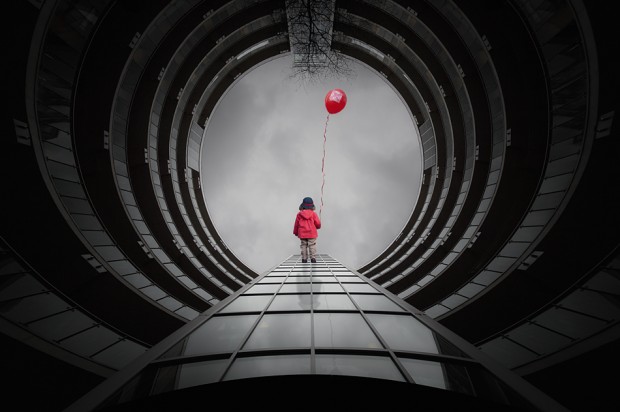
I read a blog post of Chase Jarvis about a photograph of Martin Marcisovsky and I found the interpretations very interesting . First of all the picture is very unique, but what I liked the most is that Jarvis talks about the photograph showing either isolation or complete connection with oneself. The dark elements support the claim of isolation, but in a different perspective the fact that there is no on else around implies the idea of self center moment. Additionally, Jarvis talks about how this image relates to science-fiction. Personally I think the graphics of the image portray this interpretation as well as the depth of the image. Overall I thought that Jarvis did a good simply, but effective analysis of this photograph because every interpretation has evidence to support such claim.

Saturday, September 15, 2012

When You Find Me-Ten Themes

Character:
image.png
In this short-film the character of Lisle is presented a young innocent girl. She doesn't understand what is happening for that reason she believes she can find her mother. She's a good person who never meant to harm anyone, but her childish games kept her sister from saying goodbye to her mom. Her character remains the same as she grows up and that's why she understands that even though many years have happened it's her duty to tell her sister what happened that night.

Setting:
image.png
This story takes place in more than one setting, but in my opinion the setting of the airplane in the cemetery is key because that's where Lisle finds her mother. She finds an airplane, but she thinks is a star-ship that will take her to heaven. Additionally, when she and her sister are older they come back to this place and Aurora confesses what she told her mother. After this confession, she feel better and together they find peace.
Backstory:
image.pngThe Backstory of this short-film is that Aurora is not really upset with her sister for not saying goodbye to their mom, but she's upset because she didn't apologize to her for the horrible things she said previously. In this picture you can see that there is a person in the middle, between her and her mother, which suggest their relationships was not the best at such time.

Goal:
image.png
The goal for both girls was to find their mother. For Lisle she wanted to find her because she couldn't accept that she was gone and that she would never be back. As for Aurora, she wanted to find her mother because she needed to ask for forgiveness and find peace to her soul. Both needed to see her for the last time and say goodbye. In the imagine to the right shows the two girls running towards the tree where their mother stands waiting for them.
Time:
image.pngThe time of this story is out of this world. Since the plot focuses on the after life; Lisle thinks her mother went to heaven and she imagines how to get there at the picture to the left. Her sister explains that she doesn't really know where heaven is, she just know is far. This suggest that time exists beyond planet earth and that's what the director tries to portray through Lisle's imagination.
Relationship:
image.png
The relations between Aurora and Lisle is a sisterhood. They used to be very close when they were younger, but after their mother's death, they fell apart and until Lisle confesses what happened the night she got lost, they come closer again. On the picture to the right they're walking towards their mom's grave and there is light but shadows remain demonstrating how their relationship has been. They have had good and bad moments.
Obstacle:
image.pngOn the image to the left we can appreciate the object that is in between Aurora and Lisle. The director uses it to highlight that there is an obstacle between them and it's Aurora's anger towards what at first seem her sister, but in reality towards herself. Aurora can't find peace because she didn't apologize to her mother, and Lisle can't find peace because she feels Aurora blames her for not saying goodbye to their mom.

Mood:
image.png
The mood of in the story is anger and pain. Aurora's character shows anger when she's a child, but what she really feels is pain and we discover that later when she's older. While Lisle only shows pain for losing her mom and making Aurora resent her. The mood of anger and pain dominate the entire short-film


Unknown:
image.pngThe element of unknown is strongly used in the short-film as heaven. No one really knows where we go after we die or what is heaven, but in this story the tree represent heaven. Since it's a white big tree I think of it as the tree from where Eve got the apple of sin. Before biting the apple she was in a place full of love, peace, no evil and I think the director's view of heaven is returning to the place that existed before Eve committed the sin. This place called heaven is unknown.
 Discovery
image.png
This shot of Aurora shows the moment of discovery. She discovers that her mom heard what she told her that day at the hospital. But she also discovers that her mom knew she loved her. This moment of discovery is reflected on the medium shot of Aurora. 


Wednesday, September 12, 2012

10 Themes of Story Telling


Discovery
The woman in this image is discovering things as she is walking down the road. The darkness emphasizes that there are things to discover, for example how long is the road. It is a straight, direct angle which doesn't show the entire picture, but that's the idea. She is located in the middle of the rule of thirds and the reason for this is because she is not the main attention of the image, but what she's discovering is more important.


Mood
This image shows a happy mood. The lighting is bright and the color texture is dominated by a smooth white. This helps portray the content mood as well as the position of the camera. Since it's locate to the side of the baby it creates a side-angle allowing the image to have the baby's reflection too. The mirror is said to be a reflection of how people truly feel and the smile on the baby's face indicates her happiness. Finally there are no shadows suggesting there is no negativity vibe into the baby's life.
Backstory
The color represents the exact
situation in this image. The obscurity has a double entendre, it is dark because it's probably in the afternoon, but the backstory is that she is barring her mistreated dolls. She is probably going through some tough times, depression or even mental illness. The lighting show many shadows that tell the backstory of this image, which is well set up by the long shot.

Character
The colors of this picture is basically the element that helps define the character of the child. All the bright colors represent the spirit of a child; they're full of energy and fun. However, the lighting implies that there is a darkest side to this child, the shadow on the half of the face plus all the obscurity behind her indicate she's not completely pure, innocent. The Medium Close up and the way she's looking at the camera describe her unique character as well as all that was mention previously.


Goal
The dog is scared of the bubbles and his goal is to run away from them. The medium shot captures perfectly his emotions. There is rack focus, the dog and the bubbles are on focus while the background is blurry. There entire image is lighted evenly creating the sense that it's day time.
Obstacle
The obstacle in this image is the loneliness this baby turtle faces. He's alone in the beach and since he looks small and baby turtle he could be in danger. The long shot provokes the sense of how big the beach is and how small the turtle is.
There is low lighting indicating the night is about to take over. Everything is on focus.
Relationship

The relationship is with oneself. The water us used a mirror that shows you a reflection of yourself. Your relationship with your own persona. The lighting is interesting because it creates some shadows, but it's bright at the same time. The water in the image distorts the image and add a different perspective.
Setting
The lighting strongly dominated the setting of this picture. The bright white light illuminates the image, but similarly it brings darkness. It is contrasting white and black colors and creates a balanced setting. Only two colors, two options; good or evil.  Also given that is located in nature, the setting of the forest is different from the ideal forest people create in their heads.
Time
This image shows contrasts may elements such as light, focus,  and speed of time. The focus is in the man, but also in the train. The speed of the train is faster than the man's and even though they are so close, he missed the train by a small period of time. Time can go so fast (the train), but at the same time it can go slow (man). Additionally there light and darkness in this picture.

Unknown
The lighting dominates this image, it creates a deep meaning. The white light behind the woman is an unknown and the plants around her do not help solve the mystery. She's centered in the rule of thirds and the front angle suggest she's into nature.

Wednesday, August 22, 2012

Film Review-Blog Post on The Black Hole


http://www.thesmalls.com/film/black-hole1) The Short Film is based on an original play. The idea is about an office worker who finds a “black hole”, meaning a portal which he can use it to obtain what he wants. The “black hole” helps himto go through doors, walls, glass or any physical object that usually keeps people from entering. I consider this a very unique and refreshing idea because it combines a science fiction concept in arealistic scenario.

2) There protagonist is the only character; his performance is enough to make the film successful. He’s the typical man who works in the office and seems to be tired of his job; this characterization makes his character believable.

3) In my opinion the cast of the protagonist was well done because he has the physical appearance and adequate attitude for such role.

4) The theme of the film is ambition. The plot, acting and setting lead me to this theme. From the plot the audience predicts that the protagonist will take advantage of the black hole and use to improve his life style.In beginning when he founds the black hole he wants to experiment with it, but then he realizes he could do more with it and decides to take a snack out of the bending machine by using the black hole. This action foreshadows the rest of the plot; the audience perceives the magnitude of his upcoming action. In addition to this, the acting implies that the protagonist doesn’t likehis job very much; the body language suggests he’s tired and he just wants to finish the job so he can go home. Similarly the setting help the audience understand what type of job he hasand why it’s not his dream job. From the background it seems that the building has many office cubicles and he’s probably one more employee who doesn’t have his own office. These threefactors combine demonstrate the ambition theme and explain the reasons behind it. Since the protagonists had a miserable job and he found the black which helps you to literary go throughany object, it is logical that he would want to still his boss to improve his life style.

5) As I mentioned before the setting is appropriate because it supports the storyline and helps the audience to understand the character’s motive.

6) The cinematography is effective in every area. For instance the lighting helps determine around what this films is taking place. Since it’s obscure, mostly dark, the audience knows it’s very late at night and part of this idea is because of the consistency of the dark lighting. Similarly the color of the shots reflects the mood the protagonist is in and relates to the storyline.

7) The track is very important and crucial to the short film. Given that there is no dialogue the track dictates the mood of the film and helps indicate if the protagonist’s actions would have a good ending.

8) One of the purposes of the camera angles is to establish an upcoming action/scene. The full shot angles are used to give the audience an entire picture of the situation in the storyline. And theClose-ups set the purpose of showing emotion and exposing important details.

9) There are special effects, and they are needed in order to make the short film work. Since the black hole is the fiction part of the story, special effects are required to show the audience what is going on and how the black hole can be used. Without the effect of the hand going into the whole, the short would have no credibility and would seem unrealistic.

10) An interesting symbol is the black hole itself. It might seem as a tool to get the things he desires, but it represents the ending of the story. He got trapped in a black hole. In the literary term, he can’t get out until someone comes and pulls him out of there. In the figurative term, he’s in a black hole because he didn’t steal the money; he’s life is still miserable and he’s probably going to be in trouble once people find out what he was doing.