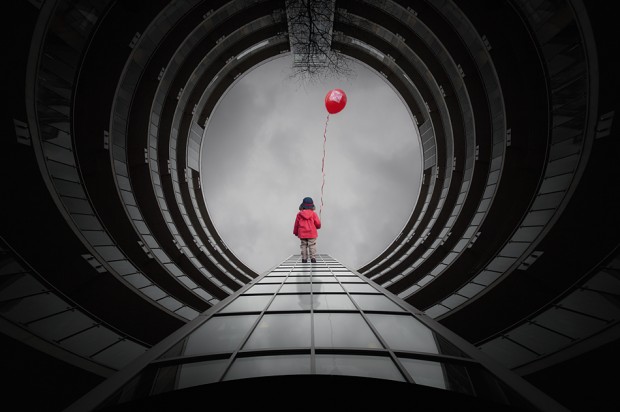
Character:
In this short-film the character of Lisle is presented a young innocent girl. She doesn't understand what is happening for that reason she believes she can find her mother. She's a good person who never meant to harm anyone, but her childish games kept her sister from saying goodbye to her mom. Her character remains the same as she grows up and that's why she understands that even though many years have happened it's her duty to tell her sister what happened that night.
Setting:
This story takes place in more than one setting, but in my opinion the setting of the airplane in the cemetery is key because that's where Lisle finds her mother. She finds an airplane, but she thinks is a star-ship that will take her to heaven. Additionally, when she and her sister are older they come back to this place and Aurora confesses what she told her mother. After this confession, she feel better and together they find peace.
Backstory:

The Backstory of this short-film is that Aurora is not really upset with her sister for not saying goodbye to their mom, but she's upset because she didn't apologize to her for the horrible things she said previously. In this picture you can see that there is a person in the middle, between her and her mother, which suggest their relationships was not the best at such time.
Goal:

The goal for both girls was to find their mother. For Lisle she wanted to find her because she couldn't accept that she was gone and that she would never be back. As for Aurora, she wanted to find her mother because she needed to ask for forgiveness and find peace to her soul. Both needed to see her for the last time and say goodbye. In the imagine to the right shows the two girls running towards the tree where their mother stands waiting for them.
Time:

The time of this story is out of this world. Since the plot focuses on the after life; Lisle thinks her mother went to heaven and she imagines how to get there at the picture to the left. Her sister explains that she doesn't really know where heaven is, she just know is far. This suggest that time exists beyond planet earth and that's what the director tries to portray through Lisle's imagination.
Relationship:

The relations between Aurora and Lisle is a sisterhood. They used to be very close when they were younger, but after their mother's death, they fell apart and until Lisle confesses what happened the night she got lost, they come closer again. On the picture to the right they're walking towards their mom's grave and there is light but shadows remain demonstrating how their relationship has been. They have had good and bad moments.
Obstacle:

On the image to the left we can appreciate the object that is in between Aurora and Lisle. The director uses it to highlight that there is an obstacle between them and it's Aurora's anger towards what at first seem her sister, but in reality towards herself. Aurora can't find peace because she didn't apologize to her mother, and Lisle can't find peace because she feels Aurora blames her for not saying goodbye to their mom.
Mood:

The mood of in the story is anger and pain. Aurora's character shows anger when she's a child, but what she really feels is pain and we discover that later when she's older. While Lisle only shows pain for losing her mom and making Aurora resent her. The mood of anger and pain dominate the entire short-film
Unknown:

The element of unknown is strongly used in the short-film as heaven. No one really knows where we go after we die or what is heaven, but in this story the tree represent heaven. Since it's a white big tree I think of it as the tree from where Eve got the apple of sin. Before biting the apple she was in a place full of love, peace, no evil and I think the director's view of heaven is returning to the place that existed before Eve committed the sin. This place called heaven is unknown.
Discovery
This shot of Aurora shows the moment of discovery. She discovers that her mom heard what she told her that day at the hospital. But she also discovers that her mom knew she loved her. This moment of discovery is reflected on the medium shot of Aurora.

 The way Nina overcomes these obstacles is through the desire
of performance and gives up her life. First, she forgets about the blood and
what she’s going though, she concentrates on the performance and never loses
focus of what her goal is. Finally, she chooses performing over her own life;
she’s aware of the fact that if she doesn’t receive medical attention she could
die, but she’s prepare to face the consequences and she is pleased at the end
of the performance because in her perspective she “reached perfection”.
The way Nina overcomes these obstacles is through the desire
of performance and gives up her life. First, she forgets about the blood and
what she’s going though, she concentrates on the performance and never loses
focus of what her goal is. Finally, she chooses performing over her own life;
she’s aware of the fact that if she doesn’t receive medical attention she could
die, but she’s prepare to face the consequences and she is pleased at the end
of the performance because in her perspective she “reached perfection”.